
Ultrasound Therapy in Dewsbury & Batley
When tissue is injured, the healing process needs blood flow, oxygen, and the right conditions to rebuild properly. Sometimes the body needs a little help getting there, especially in areas with limited circulation like tendons and ligaments. Ultrasound therapy uses high frequency sound waves to do exactly that, reaching deep into soft tissue to encourage the kind of repair that rest alone often cannot achieve quickly enough.
At Naseem Sports Therapist, this treatment has become a key part of how we support recovery from sports injuries, strains, and the kind of chronic tendon issues that tend to linger without targeted intervention.
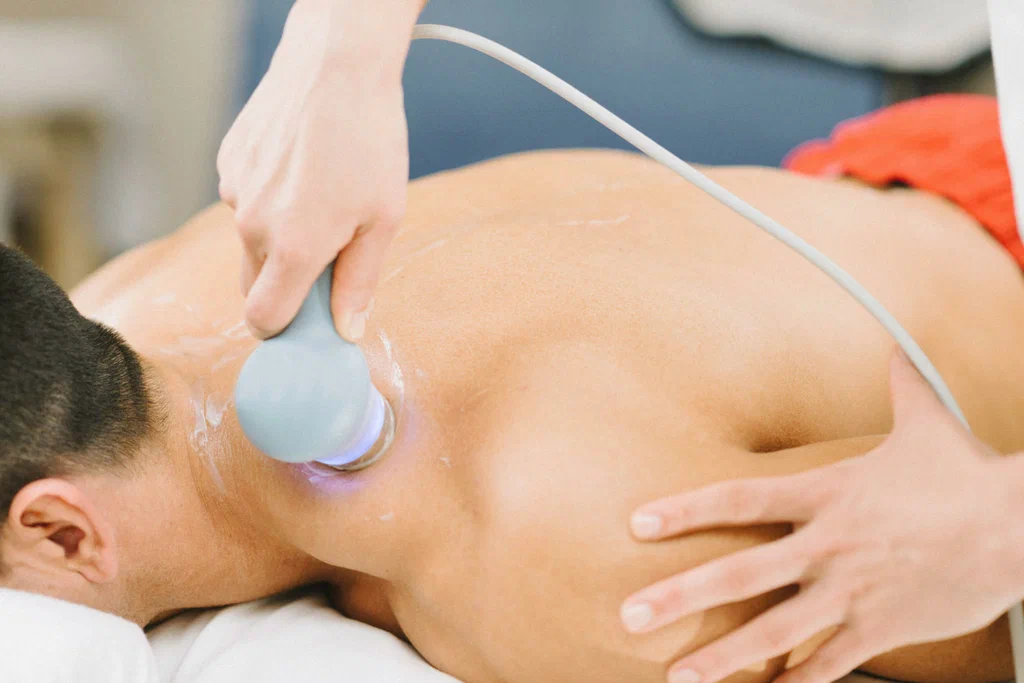
How therapeutic ultrasound actually works
A small handheld device is moved across the skin with a layer of conductive gel, emitting sound waves at frequencies far beyond what the human ear can detect. These waves travel through the skin and into the muscles, tendons, and ligaments beneath, where they create a gentle vibration at the cellular level.
This vibration generates mild heat within the tissue, which helps relax muscle fibres and improve local blood flow. More importantly, it stimulates the cells responsible for tissue repair, encouraging the body to rebuild damaged fibres more efficiently than it would on its own. The combination of increased circulation and stimulated healing is what makes ultrasound particularly effective for injuries that are otherwise slow to recover.
The treatment itself is completely painless. Most clients feel nothing more than a faint warmth or a slight tingling sensation as the device moves across the area.
What ultrasound therapy is most effective for
This treatment is commonly used at our Dewsbury clinic for:
- Tendonitis, particularly in the shoulder, elbow, and Achilles tendon
- Muscle tears and strains where deeper tissue healing needs support
- Ligament injuries, including those affecting the knee and ankle
- Lower back pain linked to inflammation rather than purely muscular tightness
- Joint stiffness following injury or periods of reduced movement
- Sports related soft tissue injuries that have not fully resolved with rest alone
It is particularly valuable for injuries in areas with naturally limited blood supply, such as tendons, where healing tends to be slower without some form of stimulation.
Who tends to need this treatment
Ultrasound therapy is most often sought out by people dealing with a specific injury or area of concern, rather than general muscle maintenance. This includes:
- Athletes recovering from a strain, sprain, or soft tissue tear
- Anyone with persistent tendon pain that has not improved with rest
- Clients dealing with chronic inflammation in a joint or muscle group
- People recovering from sports injuries who want to speed up their return to activity
- Individuals with old injuries that flare up periodically without ever fully settling
If you have an area that feels stuck in a cycle of minor improvement followed by flare ups, ultrasound therapy is often able to break that pattern.
What happens during a session
Your therapist begins with a short consultation to understand the nature of your injury, how long it has been present, and what you have already tried. They will then identify the precise area to be treated, since ultrasound works best when applied directly over the affected tissue.
A conductive gel is applied to the skin, and the device is moved in slow, continuous strokes over the area. Sessions usually last between 5 and 15 minutes depending on the size and depth of the area being treated. There is no discomfort during treatment, and you can return to normal activity immediately afterwards.
For most injuries, a short course of sessions over a few weeks produces better results than a single treatment, as the cumulative effect on tissue healing builds over time.
Combining ultrasound with other treatments
Ultrasound therapy works particularly well as part of a wider recovery plan. At Naseem Sports Therapist, it is often used before deep tissue massage, since warming and increasing circulation in the tissue first allows manual work to be more effective and comfortable.
For clients managing ongoing knee issues, ultrasound frequently complements our knee pain treatment approach, addressing the inflammatory side of the problem while other techniques work on mobility and alignment. It is also commonly paired with spinal mobilisation for clients with lower back pain that has an inflammatory component alongside joint restriction.
Book Ultrasound Therapy in Dewsbury & Batley Today
Naseem Sports Therapist, 24 Garden St, Ravensthorpe, Dewsbury WF13 3AR
+44 7856 964492
Open 7 days a week, 10:00 AM to 10:00 PM
Serving clients from Dewsbury, Batley, Heckmondwike, Mirfield, and the wider West Yorkshire area.
If an injury or area of inflammation has been slow to heal despite rest, ultrasound therapy at our Dewsbury clinic offers targeted support to move that recovery forward. Book your session today and give your body the help it needs to repair properly.